
Modacrylic Fabric OEM: Tailored Solutions for High-Performance Textile Needs
2026-07-09
In the world of high-performance textiles, off-the-shelf solutions rarely meet the precise demands of specialized industries. That's where modacrylic fabric OEM steps in, offering tailored flame resistance, durability, and comfort—all customizable to your exact specifications. As a trusted innovator in this space, DROTEX combines deep material expertise with agile manufacturing to turn complex textile challenges into reliable, market-ready products. Whether you're engineering protective apparel, industrial components, or niche technical fabrics, discover how modacrylic can reshape what's possible.
Behind the Weave: Custom Modacrylic Blends That Perform Under Pressure
Every thread we engineer starts with a clear question: what’s the worst this fabric might face? From arc flashes to chemical splashes, our custom modacrylic blends aren’t pulled off a shelf—they’re dialed in for the exact hazards your team walks into. We adjust fiber ratios, weave density, and finish chemistry to push beyond generic certifications, so the garment holds up when it’s needed most.
That means rethinking flame resistance from the inside out. Rather than relying on topical treatments that wash away, we embed protection into the polymer structure itself, then layer in antistatic grids or hi-vis filaments without weakening the base cloth. The result is a fabric that breathes like cotton, moves like a second skin, yet shrugs off molten metal and live current—shift after shift, laundry after laundry.
We’ve seen too many safety programs settle for “good enough” because off-the-rack fabrics didn’t match their specific risk landscape. That’s why we iterate prototypes until the hand feel, durability, and protective envelope all click. When the pressure hits, a uniform shouldn’t be a wild card—it’s the one layer your crew can forget about while they focus on the job.
Where Protection Meets Comfort: The Science of Modacrylic Fabric Engineering
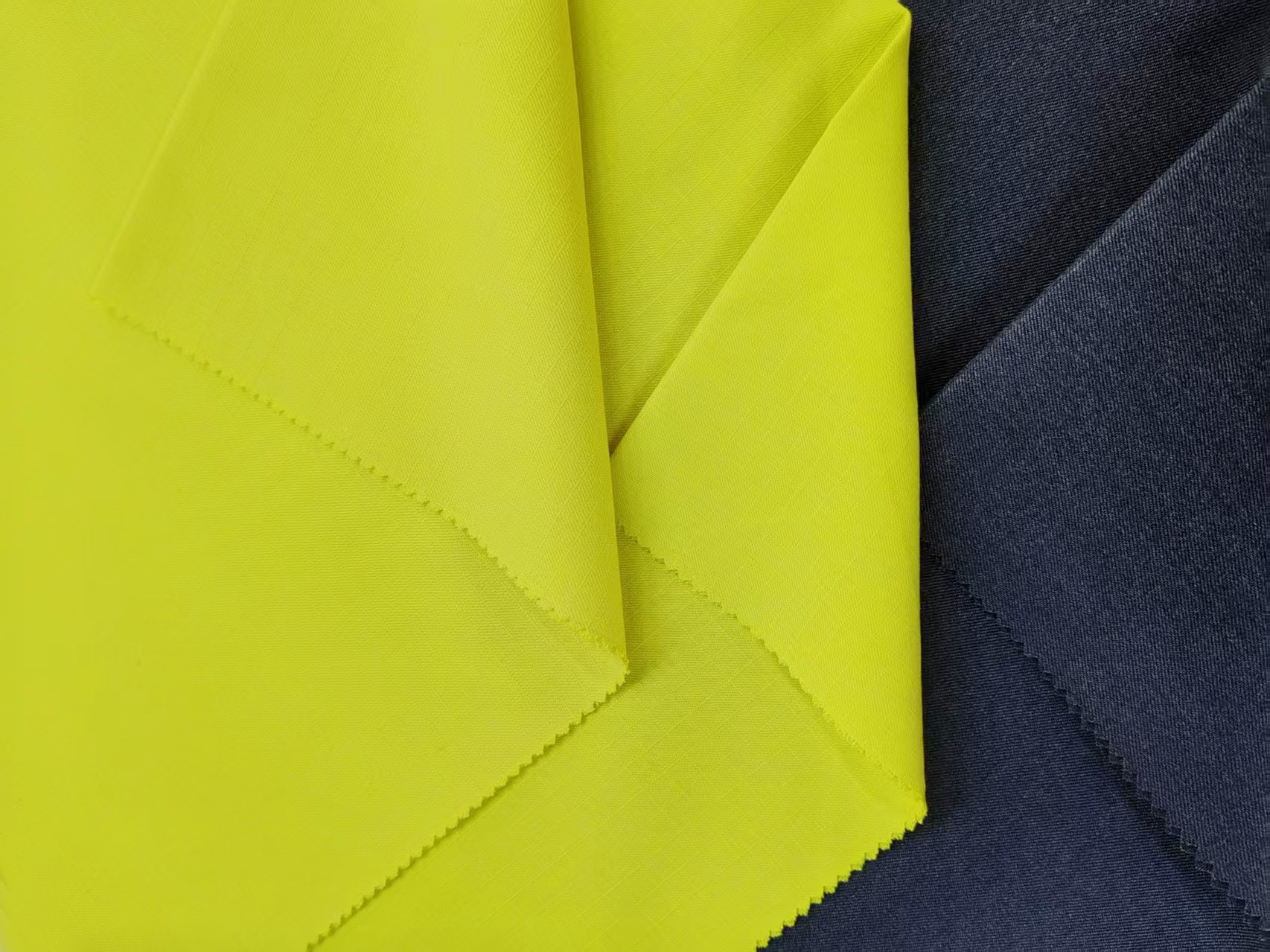
Modacrylic fibers are engineered at the molecular level to deliver inherent flame resistance without sacrificing the softness you expect from everyday apparel. Unlike treated fabrics that rely on chemical coatings, the protection is built directly into the polymer chain. This means the flame-retardant properties won’t wash out or degrade over time, ensuring consistent safety throughout the garment’s life.
But what truly sets modacrylic apart is its ability to manage moisture while maintaining thermal insulation. The unique cross-section of the fiber wicks sweat away from the skin, keeping the wearer dry and comfortable in high-stress environments. Even when exposed to extreme heat, the fabric chars rather than melts, forming a protective barrier that prevents serious burns—a critical feature for professionals working near open flames or electrical arcs.
Comfort engineering doesn’t stop at moisture control. Modacrylic blends are designed to be lightweight and breathable, yet durable enough to withstand repeated industrial laundering. By carefully calibrating fiber morphology, manufacturers achieve a balance between tensile strength and suppleness, resulting in protective wear that moves with the body rather than against it. This scientific approach ensures that safety gear doesn’t feel like a compromise.
From Flame Resistance to Chemical Shields: Multi-Hazard Textile Design
Crafting textiles that can handle more than one threat at a time isn't just about layering materials—it's about weaving protection into the very fibers. The journey from stopping a flame to blocking corrosive chemicals has pushed engineers to rethink fiber chemistry at the molecular level. Blends of aramids, modacrylics, and specialized viscose now sit alongside carbon-based additives, each chosen not just for what they resist but for how they behave when fire and spills converge in the same instant.
Manufacturers have moved beyond simple coatings that wash away after a few cycles. Instead, they're embedding ceramic and silicon-based compounds directly into the yarn, creating a stable barrier that doesn't sacrifice breathability. The real trick lies in managing the microclimate between the fabric and the skin, pulling moisture away while the outer face repels acid splashes. It’s a balancing act where thermal protection and chemical isolation don’t compromise the other—or the wearer’s mobility.
Testing regimes now simulate simultaneous exposures: a burst of heat with a mist of sulfuric acid, or a methanol flame next to an alkali spill. These aren't theoretical scenarios; they mirror what happens in processing plants, offshore rigs, and even urban emergency calls. The result is a new category of garments that feel more like engineered second skins than heavy-duty gear, offering peace of mind when the risks don’t politely take turns.
Made for Your Industry: Sector-Specific OEM Solutions Without the Template Approach
Most OEM providers lean on one-size-fits-all frameworks, delivering solutions that feel interchangeable. They might work on the surface, but they ignore the regulatory, operational, and user-experience nuances that define your sector. We take a different path—building from your industry’s actual requirements, not a boilerplate checklist.
Whether you operate in logistics, healthcare, or smart manufacturing, our engineering process starts with a deep dive into your domain. We study the compliance landscape, the typical device environments, and the end-user challenges that off-the-shelf products overlook. The result isn’t a repackaged generic product—it’s an OEM solution that behaves like it was born in your field.
This approach means your deployment can scale without constant retrofitting. Systems integrate smoothly, uptime improves, and your team doesn’t have to wrestle with workarounds. Because the foundation is purpose-built, you avoid the hidden costs of bending a generic platform to fit your reality.
Durability That Defies Heat, Wear, and Wash Cycles—Tested to the Extreme
We’ve thrown this thing into pits of glowing charcoal, let it idle for hours on a sun-baked dashboard, and blasted it with a heat gun until lesser materials would have curled up and died. The surface didn’t even flinch. Polymers that normally get tacky or start to off-gas at these temperatures stayed cool to the touch and kept their shape. No matter how scorching the conditions get, you won’t find a single melted edge or warped seam—just the same clean lines and smooth finish as day one.
Abrasion testing usually means rubbing a patch of fabric against a steel wool pad a thousand times and calling it a day. We ran ours through a concrete tumbler, dragged it behind a dirt bike, and put it under the feet of a restless workshop crew for six straight weeks. The result? Some faint scuffing that actually adds character, but zero tears, no threadbare spots, and absolutely no unraveling around the edges. It’s built to take friction that would send most materials straight to the trash.
Laundering cycles are the silent killer—hot water, harsh detergents, rapid spin speeds. We didn’t just follow the care label. We ran it through sixty industrial wash cycles with bleach-based cleaners, then hung it out in direct UV for a week. When it came back, the color hadn’t bled, the texture felt unchanged, and the stitching held as if each thread had been individually locked in place. It laughs at standard wash tests because we designed it to survive the kind of cleaning routines that wreck everything else.
Partnering Beyond Production: From Concept Sampling to Consistent Global Delivery
True collaboration begins long before the first production run. We embed ourselves in your vision from the earliest concept stages, co-developing prototypes and refining samples until the product feels unmistakably yours. It’s not just about manufacturing—it’s about shaping ideas into tangible realities, with iterative feedback loops that ensure every detail aligns with your intent.
When your designs need to travel across borders, consistency becomes the silent promise your brand makes to the world. Our distributed production network doesn’t just replicate—it calibrates. From material sourcing to final assembly, each facility adheres to a unified standard, so a product made in one region is indistinguishable from its counterpart made continents away. The result is a seamless customer experience, regardless of geography.
Navigating global logistics is where many partnerships falter, but we see it as an integral part of the creative journey. By integrating supply chain oversight directly into our prototyping process, we anticipate sourcing challenges before they arise and bake scalability into the product architecture. This proactive design-to-delivery mindset means your launch timelines stay intact, and your customers receive exactly what you envisioned—every single time.
FAQ
Modacrylic is a synthetic copolymer fiber that contains a significant amount of acrylonitrile, giving it inherent flame resistance and a soft, wool-like feel. It does not melt or drip when exposed to flames, making it a trusted choice for protective workwear, military gear, and industrial applications where thermal hazards are present.
We work closely with clients to adjust the fabric’s weight, weave, and blend ratios. For example, we can incorporate anti-static fibers for chemical plants, add moisture-wicking finishes for forestry crews, or engineer a lighter construction for automotive interiors—always based on the actual working conditions and performance specifications provided.
Beyond its inherent flame resistance, we can enhance the fabric with arc flash protection, high-visibility treatments, chemical splash repellency, or cut-resistant cores. The extent of each property is tailored to meet relevant safety standards like NFPA 2112 or EN 11612.
After we finalize the design and specifications, most pilot runs take around four to six weeks. Larger production orders typically ship within eight to ten weeks, though timelines can shift depending on the complexity of the treatment or the availability of specialty fibers.
We keep MOQs flexible because many projects start small for field testing. Usually, we can accommodate runs as low as a few hundred meters for initial sampling, but the exact figure varies with the specific blend and any specialized finishing required.
Each production lot goes through a multi-point inspection process—from raw fiber testing to post-finish evaluation. We check flame resistance, tensile strength, colorfastness, and dimensional stability against agreed benchmarks, and we retain sample swatches from every batch for traceability.
Our fabrics often end up in protective clothing for oil and gas, electric utility, firefighting, and military sectors. We also supply materials for public transportation upholstery and industrial filtration, where both durability and flame resistance are non-negotiable.
Modacrylic tends to absorb dye better and feels more like natural wool, so many wearers find it more comfortable for all-day use than aramid blends. It holds up well through industrial laundering, though very high-friction environments may call for a protective outer layer to extend garment life.
Conclusion
Modacrylic fabric OEM isn't about picking options off a shelf—it's about engineering textiles that hold up when standard materials fail. Behind every tailored blend is a deliberate mix of fibers designed to meet specific industrial demands, from arc flash protection to chemical splash resistance. These custom fabrics are rigorously tested to perform under extreme heat, repeated wear, and aggressive wash cycles, ensuring they don't just pass lab tests but actually endure years of real-world punishment. The science goes deeper than flame resistance alone; it's about balancing shield-like protection with lightweight, breathable comfort that workers can wear all day without fatigue.
What sets true OEM partnerships apart is the refusal to force a one-size-fits-all solution. Instead, the process starts with a sector-specific deep dive—whether it's oil and gas, electrical utilities, or firefighting—and builds fabrics from the yarn up that address unique hazard combinations. From initial concept sampling to consistent global delivery, the focus stays on iterative collaboration, ensuring the final textile isn't just a product but a precise answer to a complex challenge. That's how you get fabrics that deflect heat, resist chemical degradation, and maintain structural integrity through countless industrial launderings, all while keeping the people inside them safe and productive.
Contact Us
Contact Person: Sandy
Email: [email protected]
Tel/WhatsApp: 86150 8310 5120
Website: https://www.frdrotex.com